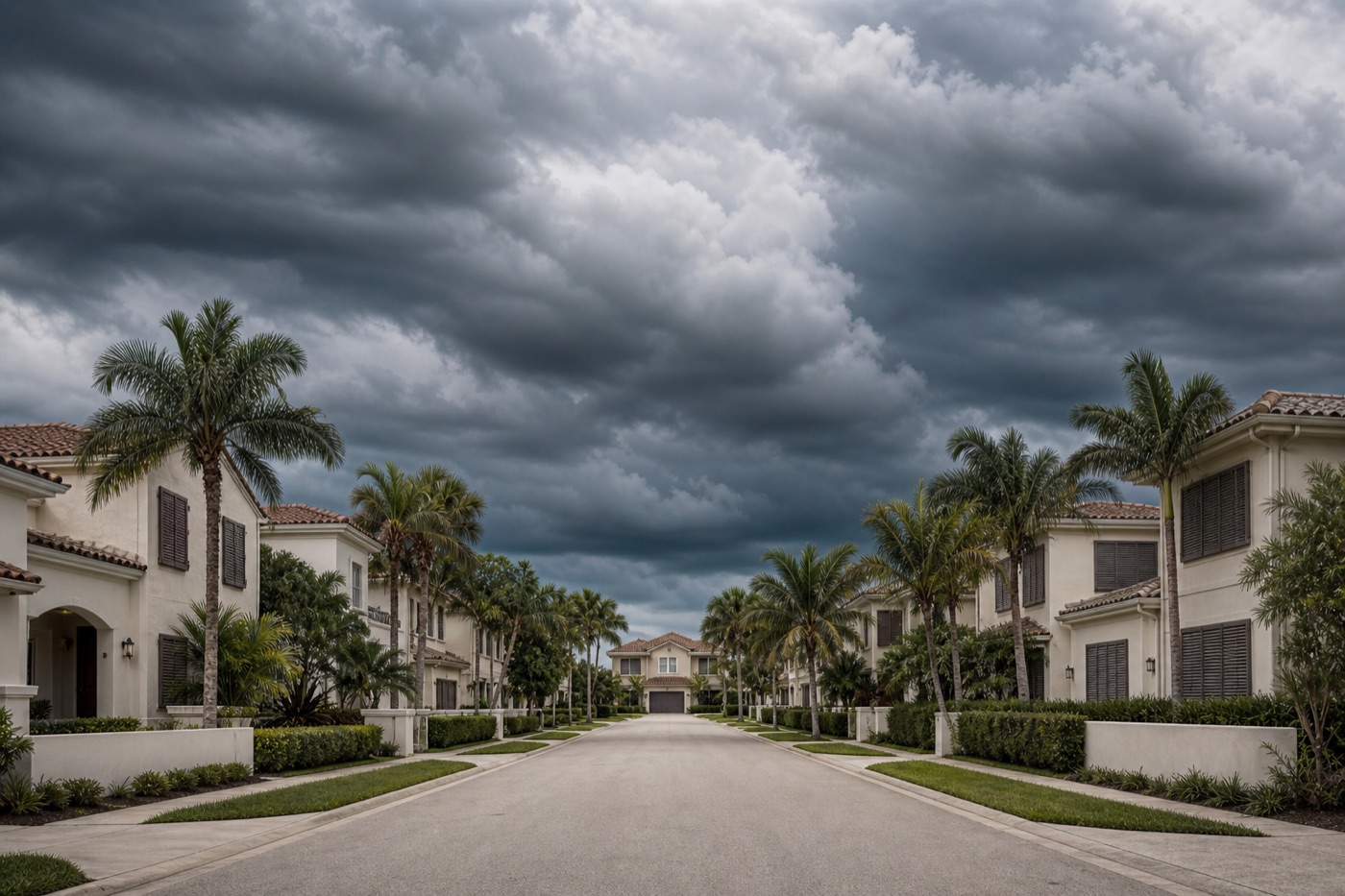


There is a moment, usually a few days after closing, when the boxes are mostly opened and the house goes quiet, and you realize you now own several machines you have never met. A water heater of unknown age. An air conditioner with opinions. A panel full of unlabeled breakers.
The house came with no manual. This is the one we would leave on the counter.
The first week: find five things
The main water shutoff. Before anything else. In most Treasure Coast homes it's at the front exterior wall near the hose bib, or in the garage. Turn it once so you know it moves; a shutoff that hasn't been exercised in a decade can be seized exactly when you need it not to be. If a supply line lets go on a Sunday night, this valve is the difference between a repair and a remediation.
The electrical panel. Find it, open it, and see whether the breakers are labeled honestly. Test every GFCI outlet in the kitchen, baths, garage, and exterior with the button on its face; humidity and salt air wear the mechanism, and a GFCI that won't trip is not protecting anything.
The water heater's age. The serial number on the manufacturer's label encodes the year. A tank under eight years old needs maintenance; a tank over twelve needs a plan. In a city where most of the housing stock went up in the early 2000s, an original tank is a countdown, not an appliance.
The air handler and its filter size. Write the size on the closet door frame in pencil like a growth chart. In a Florida summer the filter is a monthly-to-quarterly commitment, not a suggestion.
The AC condensate line. The white PVC stub near the air handler or outside by the condenser. A clogged condensate line is the single most common reason a Florida AC shuts itself off, usually on the hottest week of July, which is when everyone else's clogs too.
The first month: an hour of paperwork that pays for years
Reread your inspection report, not as a closing document, but as a maintenance list. Every 'monitor' and 'recommend service' the inspector wrote down is now yours. Most new owners never look at the report again; the ones who do start their ownership a year ahead.
Register the warranties. The AC system, the water heater, the appliances that conveyed. Ten minutes per manufacturer website, and it only counts if it happens before something fails.
Photograph everything as it stands: each room, the roof from grade level, the equipment labels with serial numbers. If a storm ever puts you across a table from an insurance adjuster, dated 'before' photographs are the strongest document you can own.
Start the record. One folder, paper or digital, where every service visit, receipt, and repair lives from today forward. A home with a documented history is easier to insure, easier to maintain, and demonstrably easier to sell. (Parker members get this as the Parker Home Record, kept for them; the discipline matters more than the format.)
The first season: the calendar Florida will hold you to
Every home has a maintenance rhythm. Florida's is simply less forgiving, and it runs on the seasons, not on good intentions.
Before summer: flush the AC condensate line and rinse the condenser coil. The system is about to run nearly every hour of every day until October; it should start the season breathing.
Hurricane season, June through November: know where your shutters or panels are and confirm you can actually deploy them; walk the yard for what becomes a projectile at a hundred miles an hour; photograph the roofline. Do this in May, in the quiet, not in the cone of uncertainty.
Before the rainy season: clear the gutters and watch where the lot drains in the first hard storm. Sandy soil moves water in ways the listing photos never showed.
Annually, on a date you'll remember: flush the water heater, Treasure Coast water is mineral-heavy and sediment is what kills tanks early, and have the dryer vent cleaned to the exterior, which is the cheapest fire prevention that exists.
The checklist, condensed
Week one: locate and exercise the main water shutoff · find the panel and test every GFCI · date the water heater from its serial number · note the filter size at the air handler · find the AC condensate line.
Month one: turn the inspection report into a maintenance list · register warranties · photograph the home and equipment labels · start the record.
Every season: filters monthly-to-quarterly · condensate line and condenser coil before summer · storm readiness in May · gutters before the rains · water heater flush and dryer vent cleaning annually.
How Parker begins with a new home
Everything above is doable yourself, and plenty of homeowners do it. What most people actually run out of is not ability but attention; the calendar slips, the record never gets started, and the house quietly reverts to being maintained by memory.
Parker begins new homes with a walkthrough: the systems found and documented, the equipment dated, the first seasonal plan set to the house rather than to a template. From that day forward the calendar is ours to keep, and the record builds itself. If you have just closed on a home in Port St. Lucie or Palm City, that walkthrough is the easiest first step you can take.
Port St. Lucie, Florida